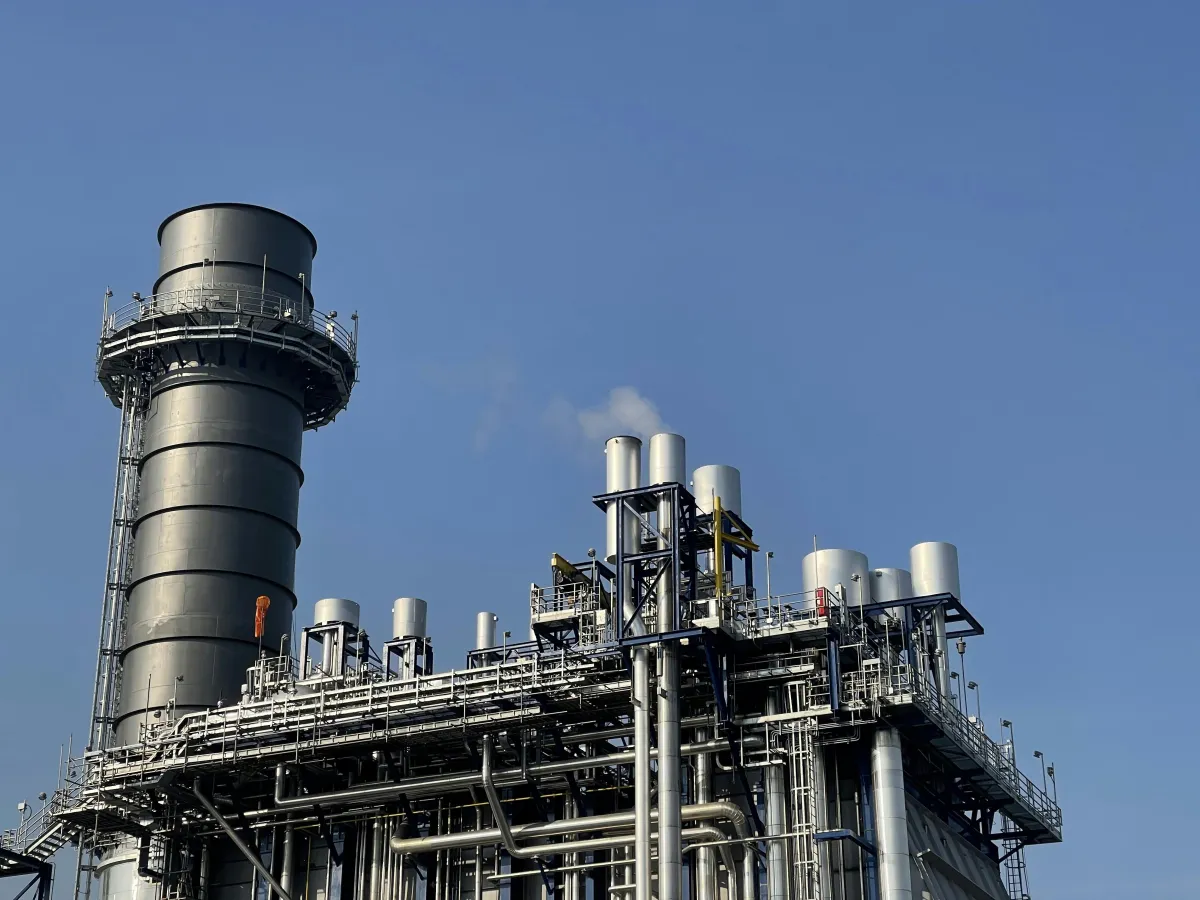
Shady hills Combined Cycle Power Plant Demineralization
Protecting the Turbine Before Feedwater Chemistry Becomes a Problem
Combined cycle power plants run RO and EDI as their primary treatment train because those technologies are efficient, low-maintenance, and reliable for bulk ion removal. They typically achieve 95 to 99% rejection of dissolved ionic species, and that's genuinely strong performance. But every plant engineer managing an HRSG feedwater spec knows that source water isn't static. Seasonal changes, well field variability, upstream process shifts, all of it can move the ionic and silica load coming into the treatment train, and RO and EDI alone don't have the margin to absorb that variability at the level a high-pressure boiler requires. That's why mixed bed DI polishing exists as the final stage, and it's why plants running combined cycle units bring it in as a standing part of their feedwater strategy rather than a reactive fix.
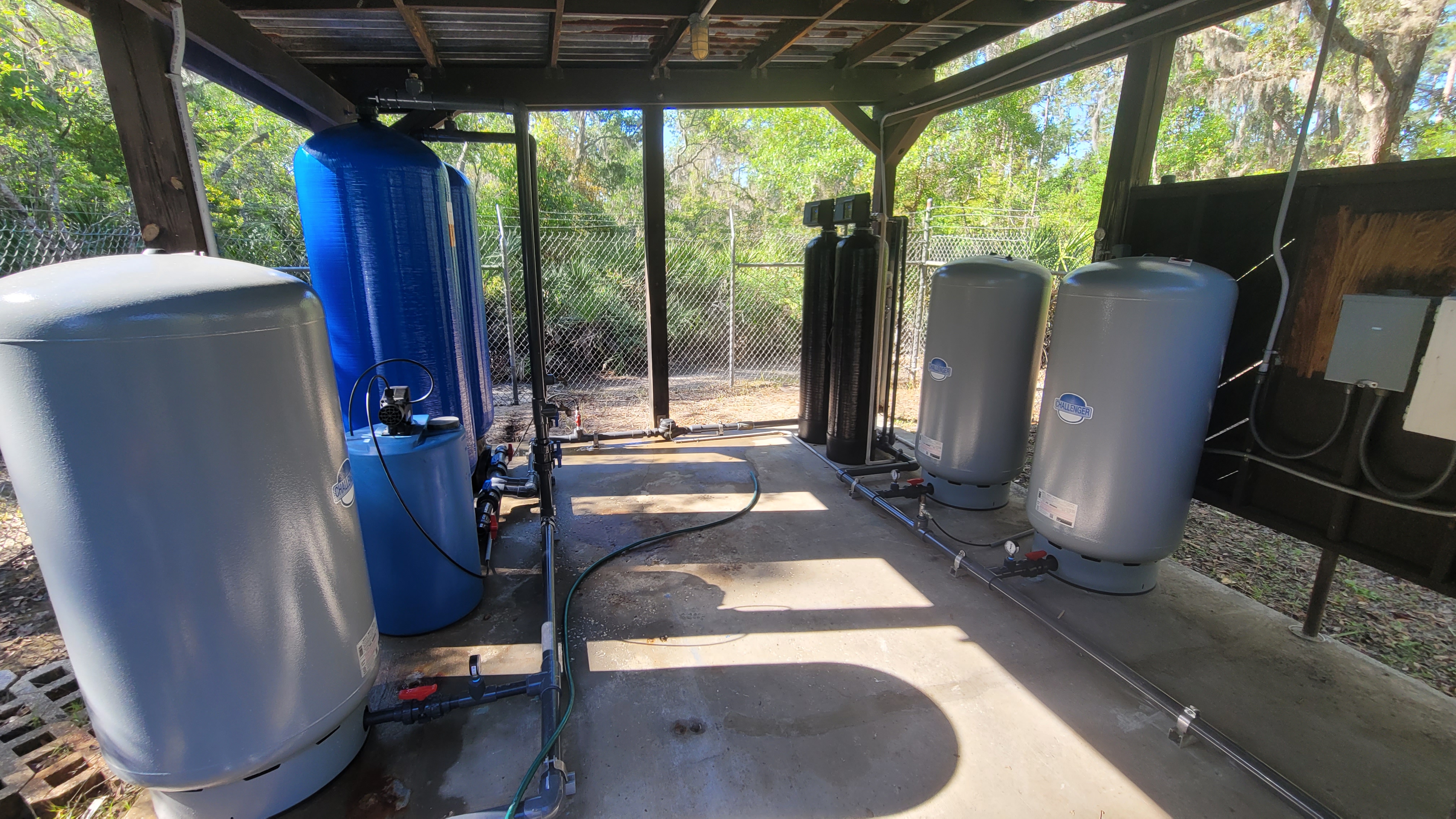
CWT recently completed a mixed bed DI polishing installation for a combined cycle plant in Shady Hills, Florida, treating RO permeate and EDI filtrate at 60 GPM. The system was sized and installed specifically to give the plant that additional margin, and it was put to a real test not long after startup.
Managing feedwater variability at your facility? Schedule a technical assessment.
Two Parameters, Two Different Risks
Conductivity and silica both get addressed by the same DI polishing step, but they protect different equipment and they're worth understanding separately.
Conductivity is a general measure of total dissolved ionic content. In a combined cycle plant, whatever's left in the feedwater doesn't leave the system when it evaporates in the boiler or HRSG. It concentrates in the boiler drum as cycles of concentration increase, or it carries into the steam path. Left unmanaged, that buildup deposits scale on heat transfer surfaces, which acts as insulation, drives up fuel consumption for the same steam output, and in severe cases leads to localized overheating and tube failure. At Shady Hills, the mixed bed system brought product water conductivity from 0.06 down to 0.04 microsiemens per centimeter, comfortably inside the range high-pressure boiler feedwater requires.
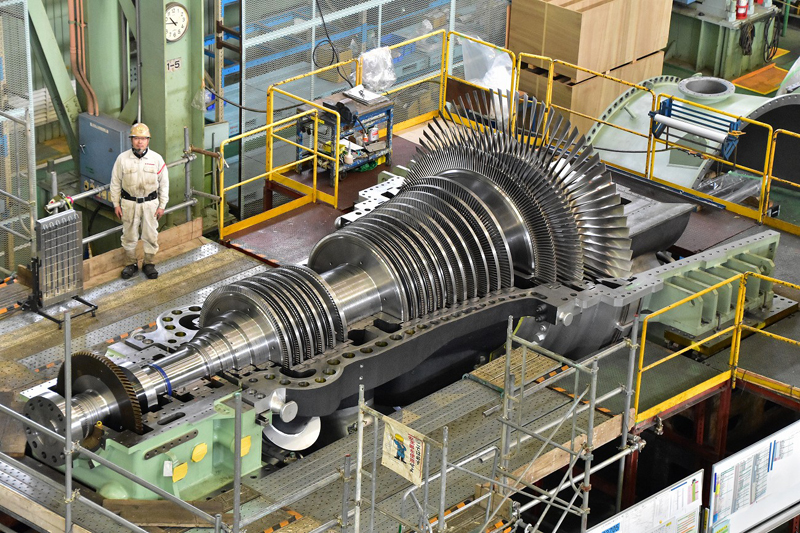
Silica is a narrower and, in a lot of ways, more consequential parameter for combined cycle plants specifically, because it behaves differently from the rest of the dissolved solid load. Silica is volatile at boiler operating pressure and temperature, so unlike hardness, it doesn't stay behind in the boiler water. It travels with the steam into the turbine, and as the steam expands and pressure drops through the turbine stages, silica solubility drops with it and it deposits directly onto the blades. Those deposits are hard, adherent, and they reduce aerodynamic efficiency and can introduce vibration from uneven buildup across the blade set. Correcting it means taking the unit offline for cleaning, which is exactly the kind of interruption a plant generating revenue on uptime wants to avoid. This is why plant feedwater specs carry a silica limit that's tracked separately from conductivity, typically in the low ppm or ppb range depending on the unit's pressure class.
The Feedwater Event and How the System Responded
During the operating period at Shady Hills, incoming feedwater silica rose to 0.06 mg/L against the plant's specified limit of 0.1 mg/L. This is the kind of shift a plant's engineering team plans for when they invest in mixed bed polishing rather than relying on RO and EDI alone: source water chemistry moves, and the system needs to hold the line without operator intervention. The mixed bed resin kept silica concentration well under the plant's limit for the full duration of the variation, and the turbine never saw elevated carryover risk.
The mechanism behind that performance is straightforward. Silica exists in water predominantly as a weakly ionized species, which means it takes the strong base anion component of a mixed bed resin bed to capture it effectively. RO and EDI both provide meaningful silica rejection on their own, but neither is designed to hold the low-ppm or ppb-level targets a combined cycle HRSG needs when incoming water chemistry shifts. Mixed bed polishing is what closes that gap, and this event is a useful confirmation that the design margin built into the Shady Hills system was sized correctly for the plant's actual operating conditions, not just its average ones.
Want a facility-specific breakdown of your silica and conductivity exposure? Book a consultation.
How the System Was Deployed
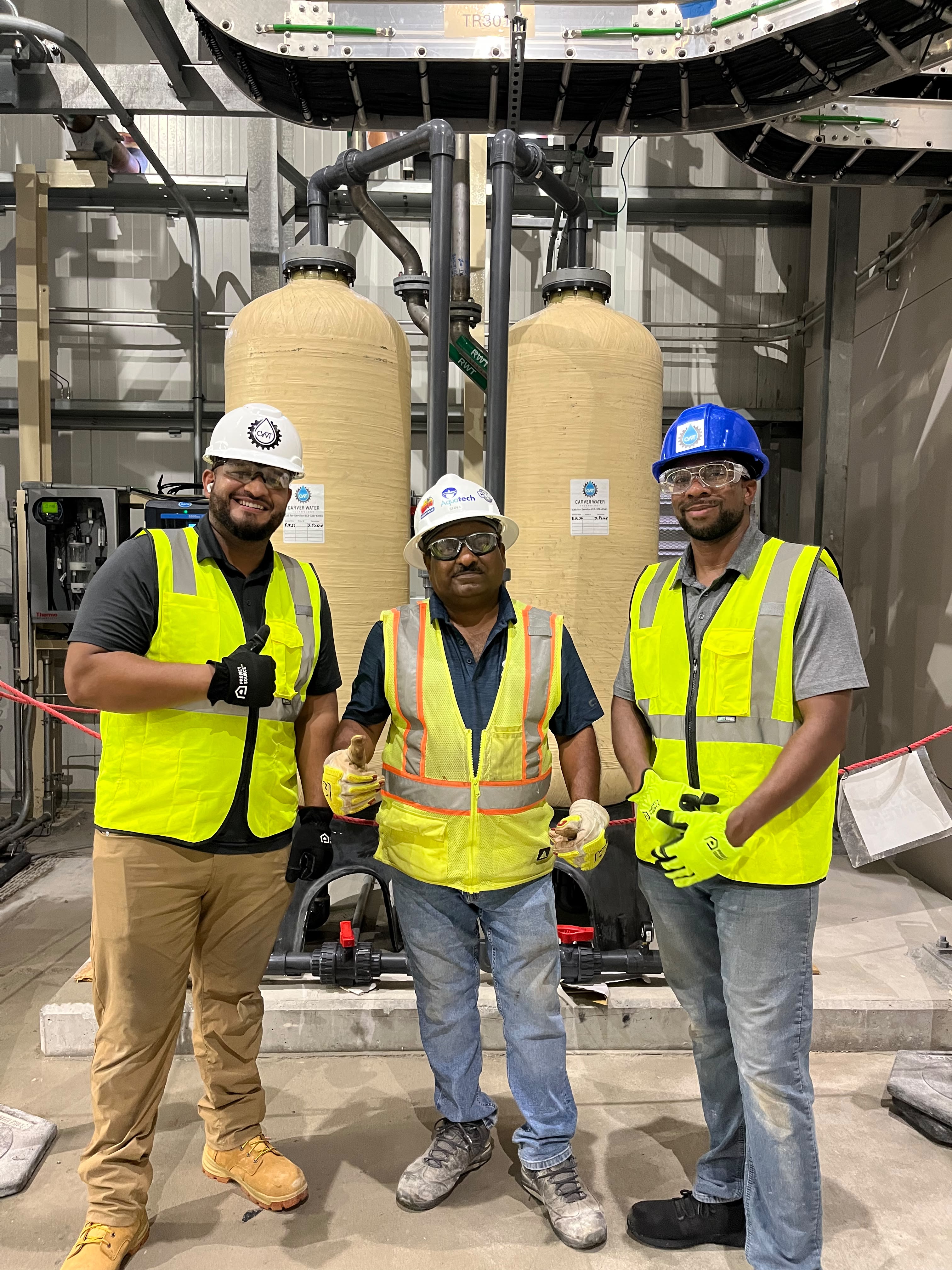
The plant needed final-stage mixed bed DI polishing on RO permeate and EDI filtrate at 60 GPM, and timing mattered. CWT deployed a 30 cubic foot rental unit first to cover the operational need immediately, while the permanent 70 cubic foot system was engineered and installed in parallel. That sequencing meant the plant never had a gap in polishing capacity during the transition.
This rental-to-permanent approach is standard practice for CWT on industrial jobs where a facility can't absorb downtime while a permanent system is being built out. The same rental fleet is available to any plant that needs interim polishing capacity while a long-term system is being engineered, whether that's a new installation, a capacity expansion, or a bridge during equipment replacement.
Working on an Active Power Generation Site
Installation work at an active power plant involves high-pressure systems, energized electrical equipment, confined spaces for vessel internals work, and chemical handling for resin regeneration and cleaning agents. CWT operates within standard industry safety practice for this kind of work, including:
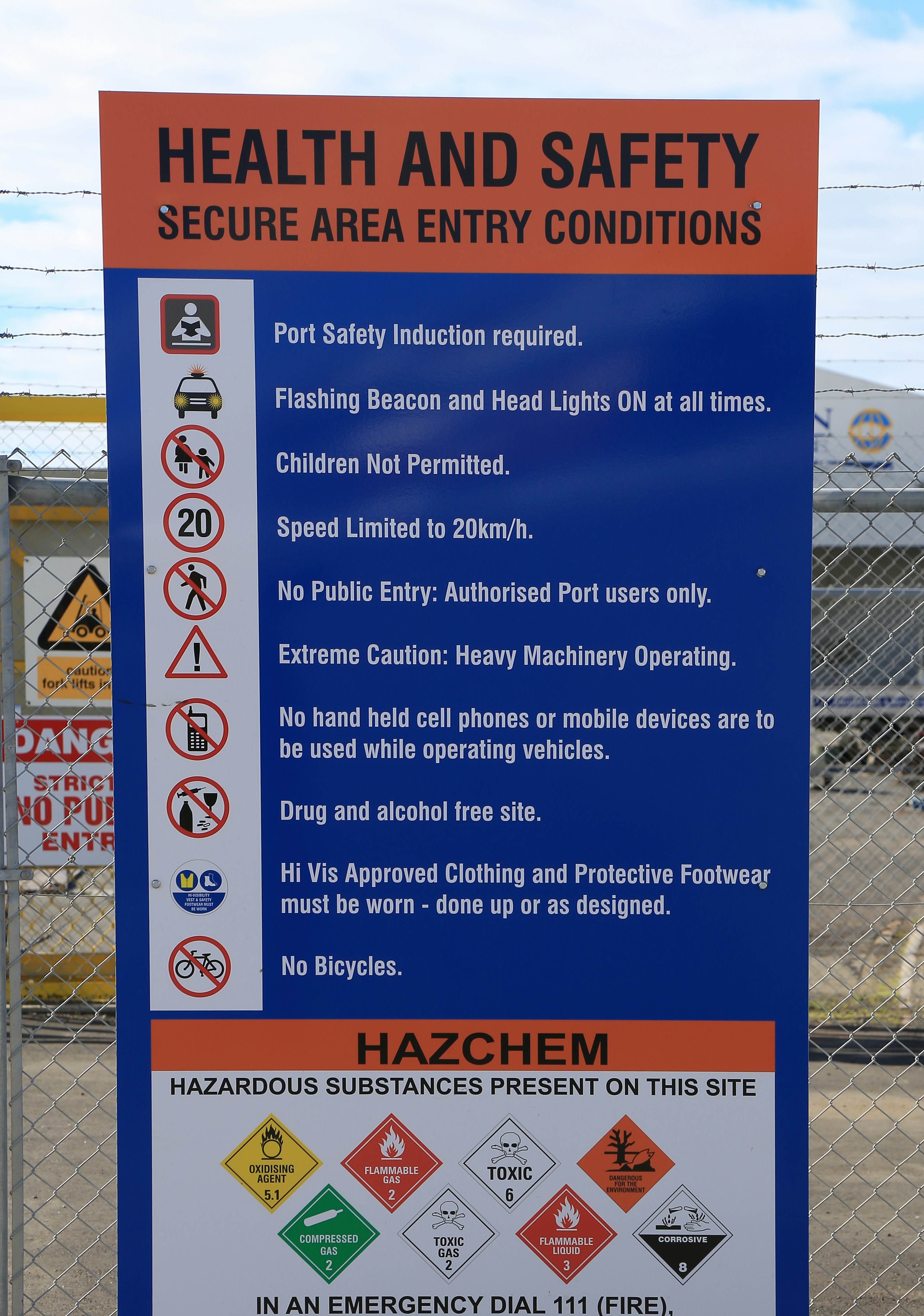
Lockout/Tagout (29 CFR 1910.147) for isolating energy sources before working on connected equipment
Confined Space Entry procedures (29 CFR 1910.146) for personnel entering the vessel for internals installation or inspection, including atmospheric testing and entry permits. Personal Protective Equipment (29 CFR 1910.132) for chemical handling and general site hazards.
Hazard Communication (29 CFR 1910.1200) with SDS availability and labeling for any regenerant or cleaning chemicals on site
Work at an active industrial facility also requires coordination with the plant's own permit-to-work system layered on top of baseline OSHA requirements, typically including site orientation, badging, and pre-job safety briefings with the client's EHS staff before work begins.
Planning for Feedwater Variability, Not Just Average Conditions
Any facility running RO or EDI ahead of a high-pressure boiler or HRSG should be sizing its polishing system for the range of feedwater conditions it might see, not just typical conditions. Source water chemistry shifts for reasons that are often outside a plant's control, and the value of mixed bed DI polishing is that it gives the treatment train the margin to absorb those shifts without putting turbine or boiler equipment at risk.
CWT services this need across Central Florida with same-day emergency response and across the broader Southeast for planned installations. We carry rental mixed bed units for interim capacity and design permanent systems sized to a plant's actual operating range, including variability, not just its baseline.
Want to know whether your current treatment train has enough margin for a feedwater shift? Schedule a free assessment.