Water Solutions For
Power Generation
Coal, gas, biomass, or municipal solid waste, the fuel source doesn't change what the boiler needs. Every steam-cycle plant runs on the same non-negotiable: water pure enough to protect the turbine, and enough of it to keep the plant online. Carver Water Technology designs, builds, and services the treatment systems that make that possible.
Everywhere Water Touches Your Steam Cycle
Boiler and HRSG feedwater — RO, EDI, and mixed bed DI polishing engineered to ASME and EPRI cycle chemistry targets
Cooling tower makeup and blowdown — pretreatment and RO systems that raise cycles of concentration and cut discharge volume
Interim and emergency capacity — rental mixed bed and RO units so a plant never has a coverage gap during install, expansion, or repair
Full facility engineering — FEED, process design, P&IDs, and equipment sizing for new-build or retrofit treatment buildings, not just a skid drop-in
The Margin That Protects Your Turbine
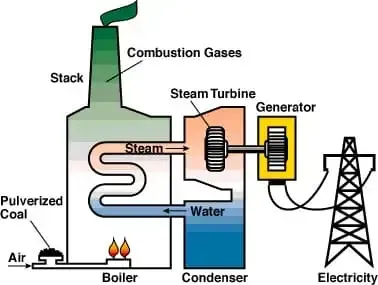
RO and EDI are the standard first-line treatment train for combined cycle, biomass, and waste-to-energy plants, typically achieving 95 to 99% rejection of dissolved ionic species. That performance isn't the finish line. EPRI's Comprehensive Cycle Chemistry Guidelines for Combined Cycle/HRSGs and ASME feedwater and boiler water quality standards set the working targets a well-run plant designs to, and RO and EDI alone don't carry that margin when source water shifts.
Two parameters drive most of the risk:
Conductivity tracks total dissolved ionic content, but raw specific conductivity in HRSG feedwater is often masked by the amines and ammonia used for pH control. This is why EPRI guidelines rely on cation conductivity, also called CACE (conductivity after cation exchange), as the real diagnostic for contaminant in-leakage. Under EPRI's AVT(O) program, condensate and feedwater cation conductivity is held at 0.2 microsiemens per centimeter or lower. At the ultrapure end of the spectrum, that same water quality is often expressed in resistivity, with ASTM Type I reference water sitting at 18.2 megohm-centimeters. CWT's mixed bed DI polishing systems are engineered against these thresholds, not an arbitrary internal number.
Silica is volatile at boiler operating pressure and temperature. It travels with the steam instead of staying behind the way hardness does, and as pressure drops through the turbine stages, silica solubility drops with it and deposits directly onto the blades, reducing aerodynamic efficiency and introducing vibration risk. Correcting it means taking the unit offline, exactly the interruption a plant generating revenue on uptime can't afford. Industry cycle chemistry guidelines hold anion and mixed bed effluent silica in the low single digit to low double digit parts-per-billion range, and CWT designs polishing capacity with margin above that target rather than sizing to a plant's average operating day.
This is why mixed bed DI polishing exists as a standing part of a well-run feedwater strategy rather than a reactive fix.
Proven in the Field
High Purity RO/DI Systems for Immediate Deployment
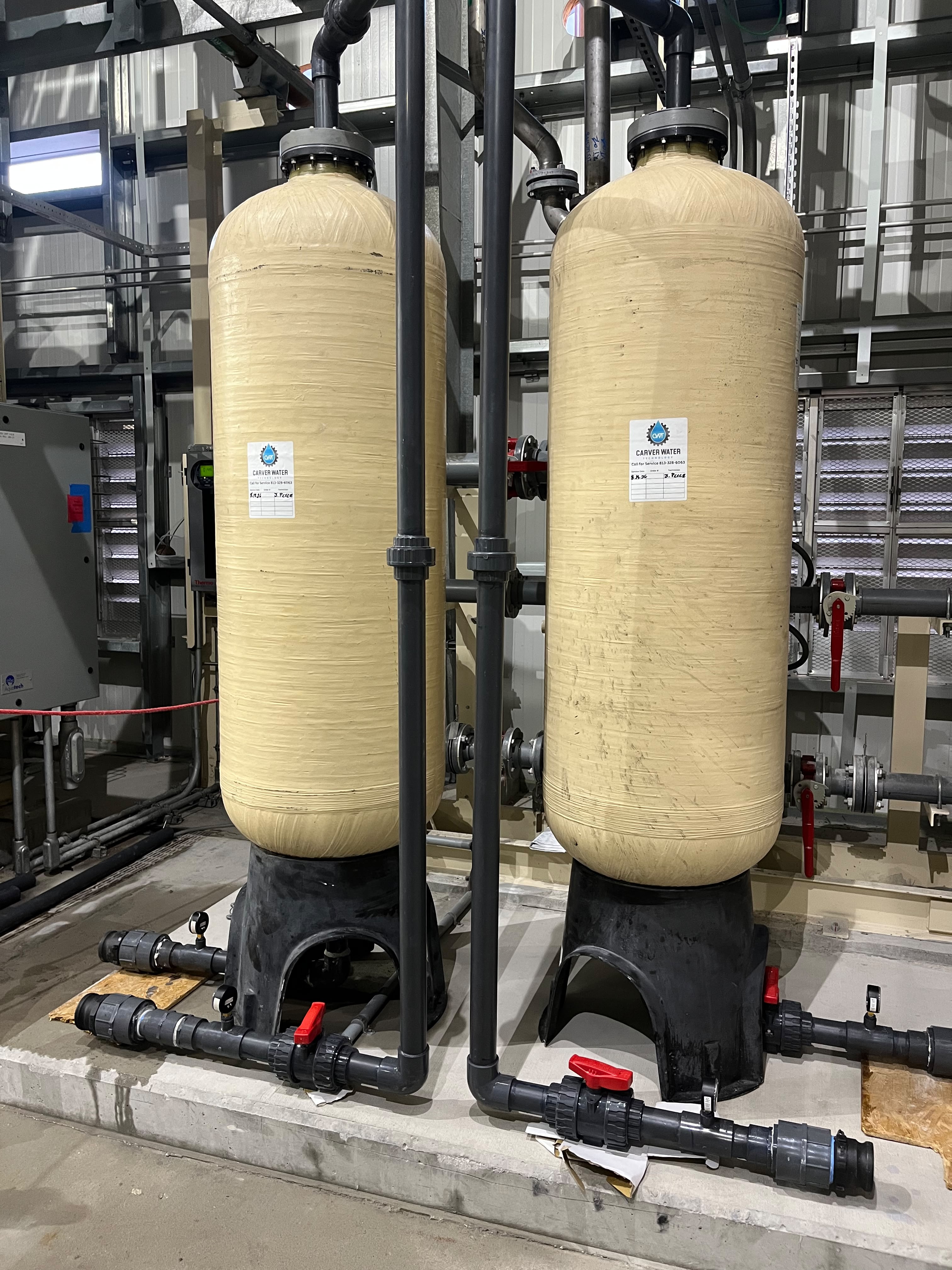
CWT designs and deploys mixed bed DI polishing systems for combined cycle plants treating RO permeate and EDI filtrate, holding product water conductivity and silica well inside ASME and EPRI feedwater guidelines through real seasonal and source water variation, not just steady-state conditions. CWT carries a rental fleet for interim polishing capacity, so a plant never has a coverage gap during a new installation, capacity expansion, or equipment replacement while a permanent system is engineered in parallel.
Check out this reference where our system brought product water conductivity down to 0.055 microsiemens per centimeter, equivalent to 18.18 megohm-centimeters resistivity.
We Engineer the Facility, Not Just the Skid
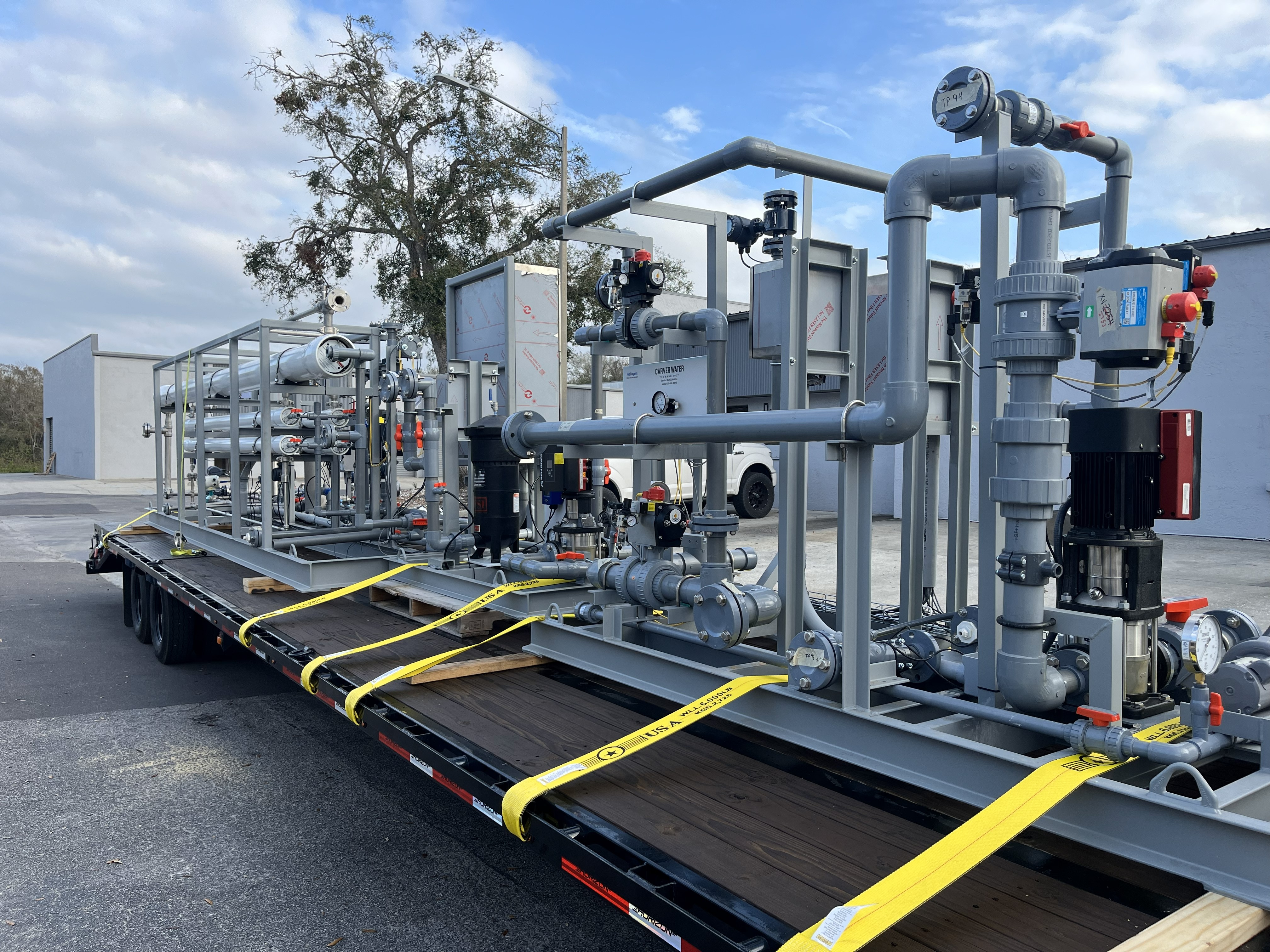
Most water treatment vendors sell a skid. CWT designs the system around it. On a concentrated solar thermal power project, CWT engineered a complete water treatment process to include three storage tanks, six chemical dosing skids, an NF/RO system with a CIP skid, and a multimedia filtration pretreatment tank and pump skid.
The project was engineered to full boiler-spec requirements before it was cancelled ahead of installation, but the engineering package itself shows the scope CWT carries: process design, equipment sizing, piping and layout, and full facility integration, not a standalone membrane package dropped into someone else's building.
That same in-house capability, FEED, process design, P&IDs, equipment sizing, applies to any new-build or retrofit power generation water treatment project.
Who We Serve Across the Steam Cycle
Combined cycle natural gas plants
Biomass power generation facilities
Municipal solid waste-to-energy plants
Cogeneration and industrial steam hosts
CWT services Central Florida with same-day emergency response and the broader Southeast for planned installations, engineering, and rental deployments.
Get a facility-specific breakdown of your silica and conductivity exposure.
Let's discuss water & wastewater solutions
Frequently Asked Questions
Why does silica matter more than other dissolved solids for boiler feedwater?
Silica is volatile at boiler operating pressure and temperature, so it travels with the steam instead of staying behind the way hardness does. As steam expands through the turbine and pressure drops, silica solubility drops with it and deposits directly onto the blades, reducing efficiency and introducing vibration risk.
Do RO and EDI alone provide enough protection for a high-pressure boiler?
RO and EDI typically achieve 95 to 99% rejection of dissolved ionic species, but neither is designed to hold the low-ppb-level silica and conductivity targets a high-pressure HRSG needs when source water chemistry shifts. Mixed bed DI polishing is the final stage that closes that margin.
What standards does CWT design feedwater treatment systems against?
CWT engineers polishing and treatment systems to ASME boiler and feedwater quality guidance and EPRI's Cycle Chemistry Guidelines for Combined Cycle/HRSGs, the reference frameworks power plant engineers use to set their own internal chemistry specs.
Why does cation conductivity matter more than standard conductivity readings?
Standard specific conductivity in HRSG feedwater is influenced by the amines and ammonia used for pH control, which can mask true ionic contamination. Cation conductivity, also called CACE, strips that interference out by passing the sample through a cation exchange column first, making it the diagnostic EPRI guidelines rely on to detect condenser in-leakage and contamination events.
Can CWT provide interim treatment capacity while a permanent system is engineered?
Yes. CWT carries a rental fleet for interim capacity, including mixed bed DI units, so a plant never has a coverage gap during a new installation, capacity expansion, or equipment replacement.
Does CWT design the full treatment facility or just supply equipment skids?
CWT provides full engineering scope, including FEED, process design, P&IDs, and equipment sizing, in addition to standard installation and maintenance of RO, DI, and NF systems.
What fuel types does CWT serve in the power generation sector?
CWT works with combined cycle natural gas plants, biomass facilities, municipal solid waste-to-energy plants, and cogeneration or industrial steam hosts across Florida and the Southeast.

Innovation
Fresh, creative solutions.

Integrity
Honesty and transparency.

Excellence
Top-notch services.

FOLLOW US


TECHNOLOGY & SERVICES
ABOUT US
CUSTOMER CARE
LEGAL
Copyright 2026. Carver Water . All Rights Reserved.