Rethinking Data Center Water Usage Strategies
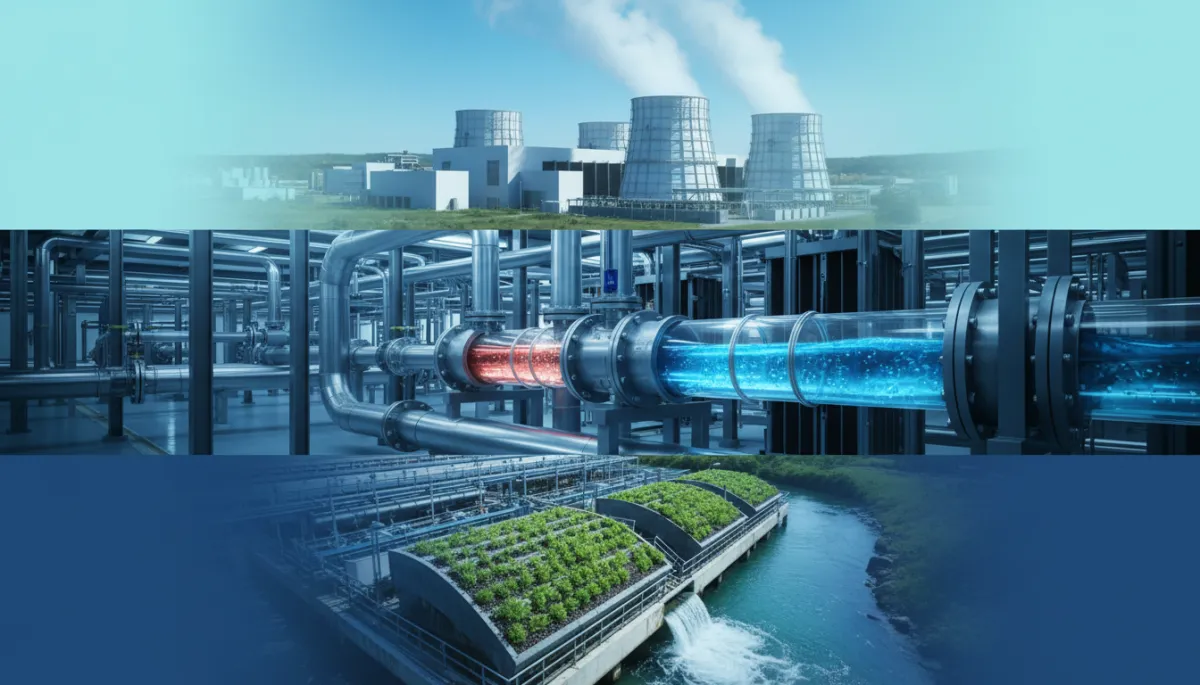
Water has become as contentious as power in deciding where new data centers can be built. Headlines focus on millions of gallons per day, but that single number hides more than it reveals. To site facilities responsibly, especially in water-stressed regions like Florida and the Caribbean, engineers, regulators, and developers need to understand how data centers actually use water, how cooling systems are designed, and why integrated concepts like Tomorrow Water's Co-Flow model are creating a new playbook for all three.
Get a cooling water treatment assessment for your facility or project.
How Data Centers Actually Use Water
When communities push back on data center projects, the conversation often jumps straight to a daily water number, roughly 300,000 gallons for a medium facility, or 1 to 5 million gallons per day for a hyperscale campus. Those figures are real, but they don't explain where the water goes or how design decisions can reduce impacts.
In broad terms, data centers interact with water in four ways:
Cooling IT equipment – primarily through evaporative cooling towers, adiabatic coolers, or refrigerant‑based chillers that may or may not use water directly.
Humidification and building HVAC – smaller volumes, but still part of the total water balance in some designs.
Process water treatment – conditioning makeup water and managing blowdown from cooling systems, which concentrates minerals and treatment chemicals.
Indirect (upstream) water use for power generation – often the largest, least visible share. A 2026 Ceres analysis estimates that by 2030, up to 72% of total water linked to U.S. data centers could be used at power plants to generate their electricity.
That last category is bigger than most people assume. A February 2026 Bluefield Research analysis found that by 2030, water for electricity generation will account for 72 percent of total water consumption associated with data centers, more than double the forecasted on-site cooling demand, with indirect water consumption from power generation nearly doubling from 54 billion gallons in 2025 to 91 billion gallons by 2030. (Source: Bluefield Research)
A separate August 2026 Ceres analysis modeling seven states that host about half of US data centers found those facilities collectively required roughly 3.4 trillion gallons of freshwater withdrawals in 2024 tied to their electricity supply, a figure that could rise to between 4.1 and 7.6 trillion gallons by 2030, with about two-thirds of the power plants evaluated located in areas of medium-high to extremely high water stress. (Source: Latitude Media)
This means "water for data centers" is not just the water that touches a cooling tower on site. It also includes the water embedded in every kilowatt-hour the facility consumes. Any responsible siting or permitting discussion needs to keep both in view.
Open-Loop vs. Closed-Loop Cooling: What Really Happens
Much of the confusion around data center water use comes down to how people use the terms open-loop and closed-loop. On paper, both can look similar in total gallons per day, but their impact on local water resources is very different.
Open-loop cooling: one-way flow, higher withdrawal. In an open-loop system, the data center withdraws water from a river, lake, aquifer, or municipal supply, passes it through heat exchangers or cooling towers, and discharges it, often warmer and with altered chemistry, back into the environment or sewer. The water makes a single pass through the facility’s thermal system before leaving the site boundary.
High withdrawals: Large volumes must be drawn continuously, which can stress local sources, especially in drought‑prone regions.
Thermal and chemical discharge: Return flows can be several degrees warmer and may contain treatment chemicals, salts, or biocides if not carefully managed.
Most big data centers today use some form of evaporative cooling because it's energy-efficient, especially in hot climates, but it directly uses water, often drawn from municipal supply, and industry estimates show that roughly 75 to 90 percent of data centers worldwide rely on water-based cooling as their primary method. (Source: Florida Water and Pollution Control Operators Association)
Closed-loop cooling: recirculation, lower withdrawal but not zero use.
In a closed‑loop system, water circulates repeatedly in pipes or coils, transferring heat from IT equipment to cooling towers or dry coolers. Fresh “makeup” water is only added to replace what is lost through evaporation, drift, and blowdown. The loop itself is sealed; the water inside does not directly mix with the environment.
Lower withdrawals: Because the same water is reused many times, total withdrawal from local sources can be significantly reduced compared with open‑loop systems of similar capacity.
Better control of quality: Operators can tightly manage scaling, corrosion, and biological growth through chemical or advanced treatment, extending equipment life and improving efficiency..
Closed-loop cooling can reduce freshwater use by up to 70 percent compared to traditional open evaporative methods, and a closed-loop cooled data center might only consume on the order of 5 to 10 percent of its water withdrawal, returning 90 to 95 percent as wastewater available for treatment. (Source: FWPCOA, https://www.fwpcoa.org/content.aspx?page_id=5&club_id=859275&item_id=130961)
📌 Key takeaway: Closed-loop does not mean water-free. It means water is recirculated, so withdrawals are lower and more predictable, but evaporation and blowdown still represent real consumption and discharge that must be managed.
Withdrawal vs. Consumption: The Metrics That Matter Locally
When communities hear that a proposed data center will use a million gallons a day, they are usually hearing a withdrawal number. From a watershed perspective, the more important question is how much of that water comes back.
Water withdrawal is the total volume taken from a source over a period of time. Water consumption is the portion not returned to the same watershed in usable form, typically because it evaporates. In a typical open-loop tower system, 70 to 80 percent of the water withdrawn is lost as evaporation, while the remaining 20 to 30 percent is discharged as liquid wastewater that goes to a sewer or treatment plant. (Source: FWPCOA)
A data center that withdraws a million gallons a day but returns 900,000 gallons of treated water to the same basin has a very different hydrologic footprint than one that evaporates most of what it takes in. For regulators and utilities, this distinction affects
Long‑term aquifer drawdown and surface water levels
Instream flow requirements for ecosystems and downstream users
The sizing and resilience of municipal treatment plants and sewer networks
Moving the conversation from gallons per day to withdrawal versus consumption versus return quality enables more locally appropriate decisions, and opens the door for integrated models like Co-Flow that explicitly design for beneficial return flows.
AI, HPC, and the Shift to Direct-to-Chip and Immersion Cooling
High-density AI training clusters and high-performance computing are reshaping the thermal profile of data centers. Racks that once dissipated 5 to 15 kW now exceed 80 kW, with roadmaps heading well beyond 100 kW. Traditional air-cooled designs struggle at these densities. Traditional air‑cooled designs struggle at these densities, and air‑cooled chillers and towers tend to be less water‑efficient at such high loads.
In response, operators are rapidly adopting direct‑to‑chip liquid cooling and immersion cooling:
Direct‑to‑chip cooling circulates a liquid coolant through cold plates mounted directly on CPUs and GPUs. That liquid loop can be coupled to dry coolers or hybrid systems that use little or no evaporative water, especially in moderate climates or at night.
Immersion cooling submerges entire servers in dielectric fluids that efficiently capture heat. This design can eliminate most air‑handling equipment and shrink the footprint of any remaining water‑based cooling infrastructure.
💡 Pro Tip: For AI and HPC deployments, pairing liquid cooling with reclaimed or non‑potable water sources can dramatically cut both direct water consumption and indirect use tied to inefficient power and chiller systems. (Source: FWPCOA)
While AI is driving overall data center power and water demand upward globally, its cooling technologies, if designed thoughtfully, can actually reduce water intensity per unit of compute. That’s a crucial nuance for planners weighing the tradeoffs of new AI campuses in water‑constrained regions.
Water Quality, Wastewater, and Why Discharge Management Matters
Gallons aren't the only issue. Data centers that use water for cooling produce substantial wastewater that can contain treatment chemicals like biocides and anti-corrosion agents, concentrated minerals, and even heavy metals picked up from the system. Poorly managed discharge can pollute local waterways or overburden sewage treatment plants, and in some cases spikes in discharge from a data center have strained municipal water treatment capacity, which is precisely why some municipalities now require data centers to pre-treat their wastewater on site before releasing it. (Source: FWPCOA)
That's why a cooling water treatment assessment is no longer a box-checking exercise, it's central to project feasibility and social license.
📌 Action step: Get a tailored cooling water treatment assessment for your facility or project before you commit to a site or cooling strategy. [Talk to CWT about compliance pretreatment] →
What Industry Leaders Like Google and Amazon Are Doing Differently
The largest cloud providers have become lightning rods in the water debate, but their own disclosures are instructive. Google's 2026 Environmental Report shows the company's water consumption climbed 34 percent to 10.9 billion gallons in 2025, more than double its 2021 level, with data centers accounting for most of the increase, driven by rapid AI infrastructure expansion. (Source: Axios)
Google is pairing that growth with a stated stewardship commitment. The company's water stewardship projects replenished approximately 7.7 billion gallons of water in 2025, roughly 78 percent of that year's freshwater consumption, across 165 projects spanning 97 watersheds, as part of its ambition to replenish more water than it consumes by 2030. (Source: Google)
Amazon's disclosure tells a different part of the story. AWS reported a water usage effectiveness of 0.12 liters per kilowatt-hour for 2025, roughly seven times better than the industry average of 0.84 L/kWh, in the company's first-ever absolute water disclosure. (Source: Axis Intelligence)
These numbers show two things at once. Water demand tied to AI and cloud growth is rising fast industry-wide, and it is possible to deliver massive computing capacity without a proportionally massive water footprint when reclaimed water and advanced cooling design are built into the strategy from the start. Google, for example, uses reclaimed or non-potable water at more than 25 percent of its data center campuses, including a facility where it cools operations using recycled municipal wastewater that would otherwise discharge to a river, treating any leftover water before returning it. (Source: Google)
That single example, cooling a data center on recycled municipal wastewater and returning treated effluent to the environment, is functionally the same principle Co-Flow is built around, just implemented as a retrofit rather than as co-located infrastructure from day one.
Introducing the Co-Flow Model: Data Centers at Water Resource Recovery Facilities
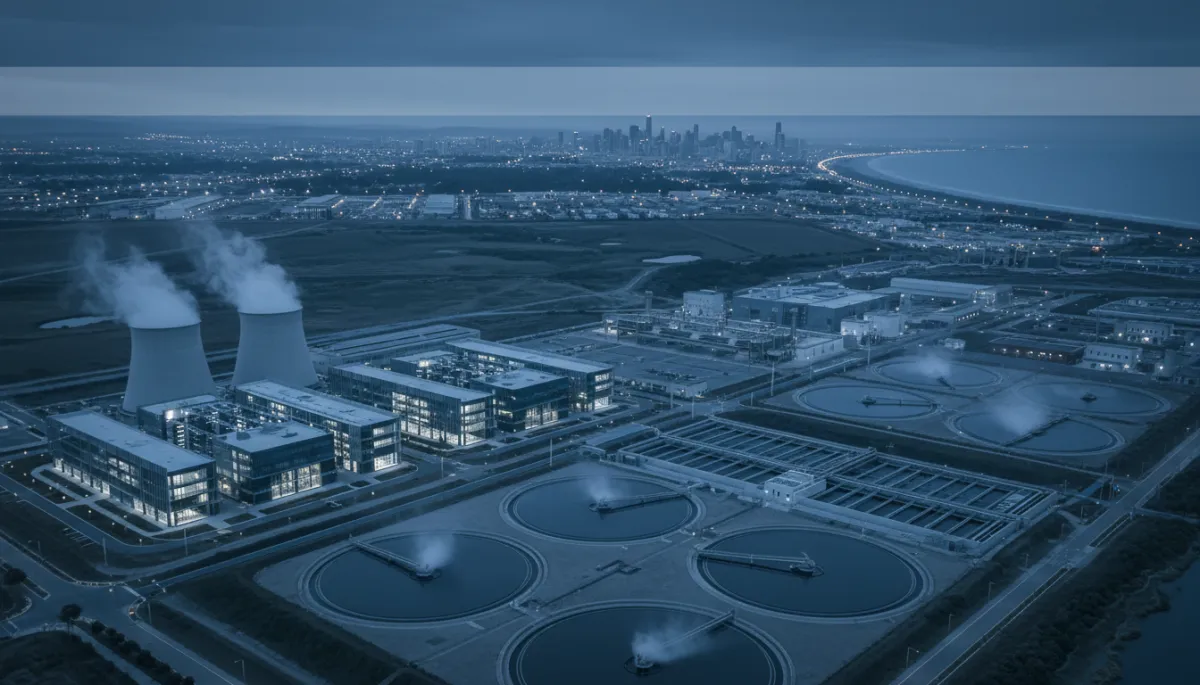
Tomorrow Water's Co-Flow model, a patented initiative from Tomorrow Water and its parent company BKT, takes the reclaimed water idea further. Instead of piping treated effluent long distances, Co-Flow sites data centers directly at or adjacent to water resource recovery facilities (WRRFs), the modern term for wastewater treatment plants, and integrates their operations in a coordinated way.
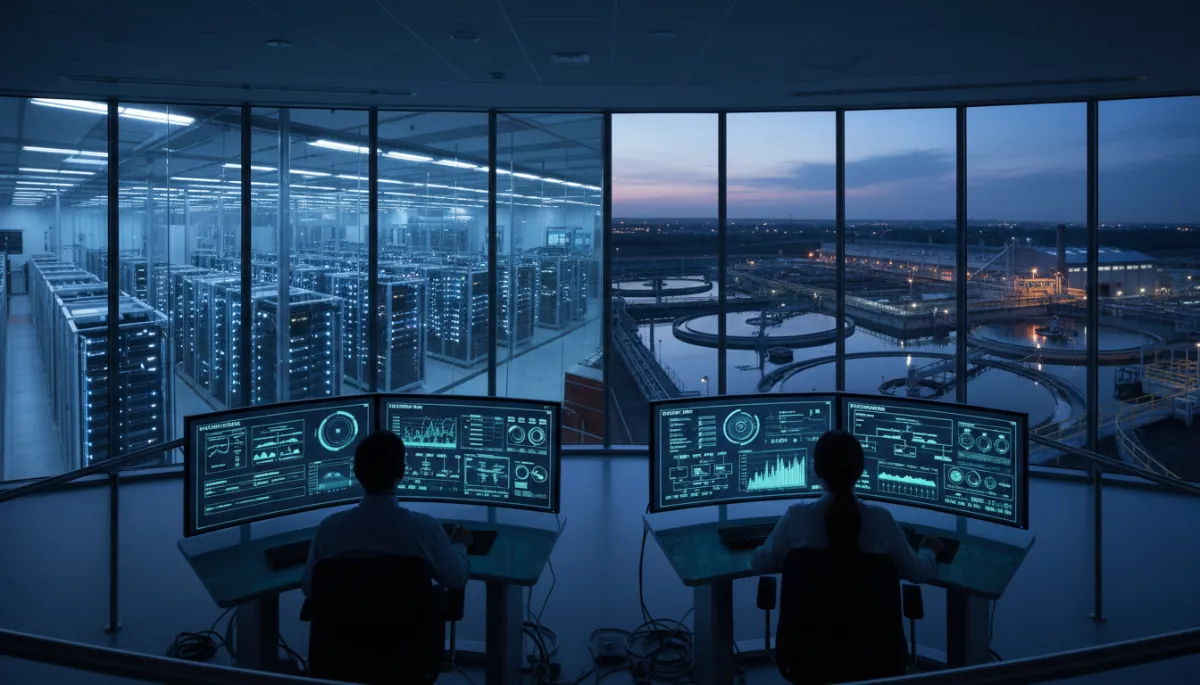
Co-Flow creates bidirectional thermal and hydraulic loops. The WRRF provides treated effluent as a non-potable cooling water source, reducing withdrawals from drinking water supplies or aquifers. The data center's waste heat is transferred, via heat exchangers and recirculating loops, into the WRRF's biological treatment and sludge drying processes, where that heat does useful work. Instead of being a burden on municipal water systems, the data center becomes an anchor tenant that helps finance and modernize critical wastewater infrastructure, while securing a resilient, non-potable water supply for its own operations.
The economics support the design. Cooling accounts for 30 to 50 percent of a typical data center's operating cost, so siting at a facility that can absorb and reuse that heat load changes the operating cost structure in a way that retrofitting cooling towers onto a standalone site cannot match. This isn't a solo engineering exercise either. Tomorrow Water partnered with Samsung on Co-Flow, and Arcadis is running the techno-economic evaluation and developing the first US Co-Flow projects, including a published desktop feasibility study modeling a medium-sized water recovery facility in the western US. Having Arcadis independently validate feasibility gives regulators and permitting bodies confidence a proposal has been engineered rigorously rather than pitched optimistically.
The Engineering Edge: Proteus Biofiltration
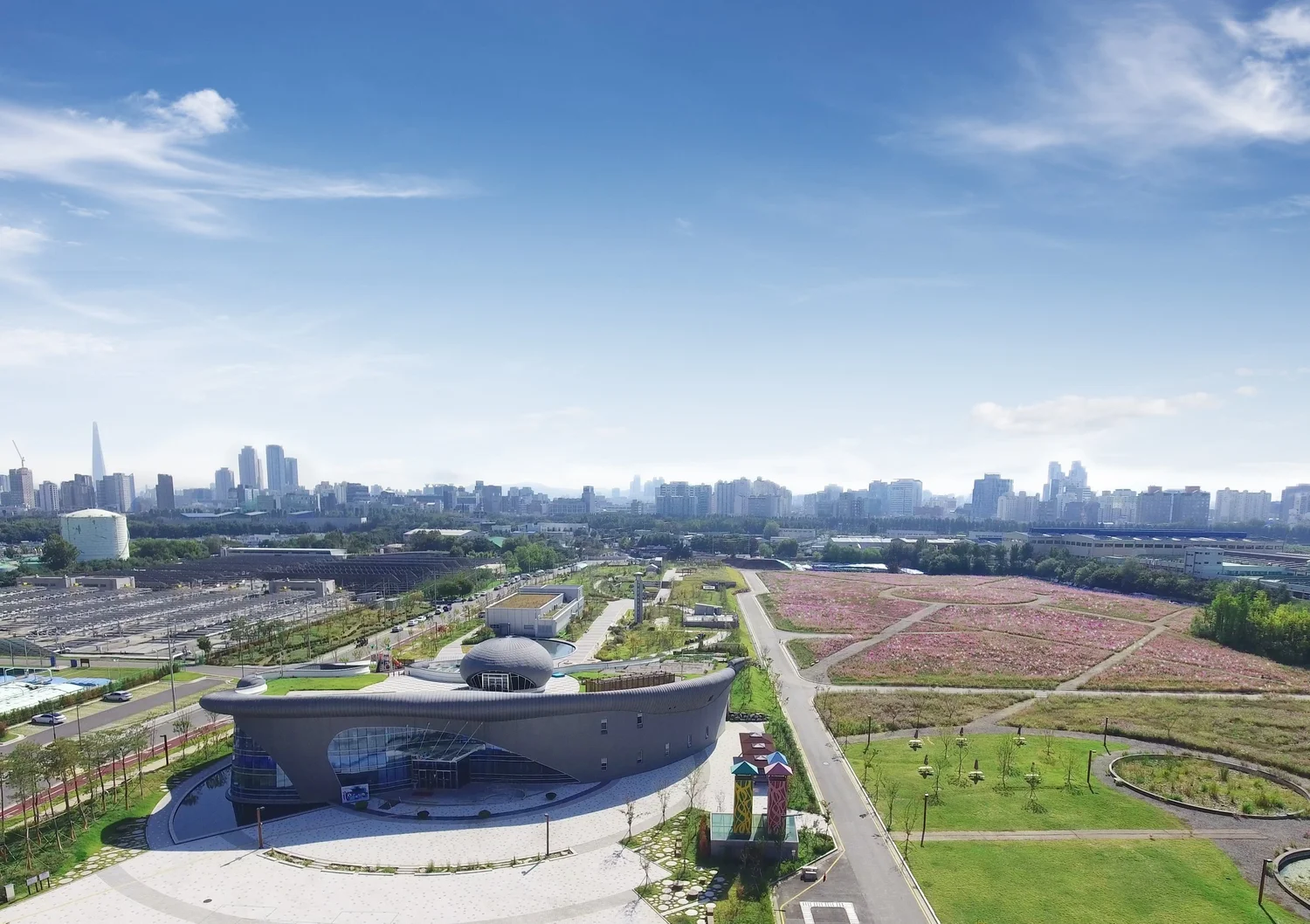
Co-Flow's core technical advantage is Tomorrow Water's Proteus biofiltration platform, a high-rate, compact system that combines physical filtration and biological treatment in a single step. Over 90 percent of wastewater plants still run primary clarifiers that gravity-settle influent over two to three hours. Proteus performs the same function in under 30 minutes, reclaiming up to 85 percent of a site's footprint, enough land on a large facility to host meaningful data center infrastructure without acquiring a separate parcel or building cooling infrastructure from scratch.
In a Co-Flow configuration, Proteus acts as both a treatment accelerator and a bridge technology, making it easier for municipalities to meet tightening discharge permits while opening new reuse pathways, including cooling water makeup, that directly benefit co-located data centers.
Why Florida, the Caribbean, and North America Are Prime Co-Flow Markets
The EPA and other federal bodies have highlighted the need for massive investment in water and wastewater infrastructure over the coming decades, particularly in coastal and climate-vulnerable regions. That creates a genuine window for pairing digital infrastructure with water infrastructure.
Florida and the US Southeast. The EPA estimates roughly 900 US water resource recovery facilities will have treatment capacities over 10 million gallons per day by 2032, and Tomorrow Water's own modeling puts 900 to 1,500 data centers as potentially sitable on facilities like these through primary clarifier retrofits. Florida has a disproportionate share of the WRRFs that fit this profile: aging clarifier infrastructure, fast-growing metro areas with real water availability constraints, and coastal municipalities under pressure to upgrade wastewater plants for more intense storms, often under tight budget constraints. Co-Flow offers Florida utilities and counties a way to turn data center interest into co-funded WRRF modernization.
The Caribbean. The region is no longer a footnote in the global data center conversation. In May 2026, the Dominican Republic signed infrastructure deals with NVIDIA and Google as part of a combined investment package exceeding $600 million, and the University of the West Indies launched a $5 million AI institute the same month. Despite representing roughly 6.6 percent of global GDP, Latin America and the Caribbean currently receive only about 1.12 percent of global AI investment, a gap analysts increasingly read as untapped potential rather than a structural weakness. (Source: News Americas, https://www.newsamericasnow.com/can-caribbean-be-next-data-center-valley/)
Caribbean governments are actively driving this. Regional leaders are pursuing Tier IV data center expansion, federated cloud infrastructure, and GPU investment as part of a deliberate push to strengthen digital and infrastructure sovereignty across the hurricane-prone region. (Source: BNamericas, https://www.bnamericas.com/en/interviews/caribbean-governments-drive-data-center-investment) The regional market was valued at approximately $62 million in 2021 and is projected to reach over $120 million by 2027, growing at roughly 11.7 percent annually, with the Bahamas, Panama, Jamaica, and the Cayman Islands among the countries currently attracting the most investment. (Source: GlobeNewswire/Arizton, https://www.globenewswire.com/news-release/2022/08/03/2491800/0/en/Caribbean-Data-Center-Market-to-Reach-Over-120-Million-by-2027-Over-50-Million-to-be-Invested-in-Core-Shell-Development-Arizton.html)
But island nations face some of the world's toughest infrastructure constraints alongside that opportunity, and this is where Co-Flow's case gets genuinely strong rather than aspirational. Wastewater treatment across much of the Caribbean is underbuilt, aging, or simply absent, and untreated or partially treated sewage discharging to the ocean is a documented, ongoing problem, not a historical one. Infrastructure for wastewater treatment across Caribbean small island developing states is described in peer-reviewed research as mostly antiquated or non-existent, with the region's water-energy-food systems already under unsustainable stress from climate change, population growth, and tourism demand. (Source: Frontiers in Environmental Science, https://www.frontiersin.org/journals/environmental-science/articles/10.3389/fenvs.2023.1212552/full)
The World Resources Institute documented this directly across multiple Caribbean sites, finding that untreated wastewater is frequently released due to poorly maintained and outdated infrastructure and unplanned development. In the specific communities WRI studied, only 12 to 15 percent of the population in Southwest Tobago and Chaguanas is connected to a centralized treatment system at all. (Source: World Resources Institute, https://www.wri.org/insights/beneath-caribbean-sea-wastewater-problem-lurks-unnoticed)
Barbados is a well-documented case in point. Only about 14 percent of the sewage generated by the island's population of roughly 300,000 people is treated in municipal wastewater treatment plants at all, with the rest handled through septic systems or subsurface disposal pits, and the treated flows that do exist are discharged out to sea. One of the island's two municipal plants provides primary treatment only, meaning it removes solids but not the biological secondary treatment most modern regulatory frameworks require before ocean discharge. (Source: ResearchGate, https://www.researchgate.net/publication/254339552_Confronting_the_Challenges_of_Sewerage_Management_in_the_Caribbean_A_Case_Study_from_the_Island_of_Barbados)
The barriers aren't purely technical, they're structural. A regional assessment under the Global Environment Facility's Caribbean Regional Fund for Wastewater Management identified low political priority, unstable funding, limited utility capacity, inconsistently enforced regulation, and poor interagency coordination as the recurring obstacles, even though Caribbean nations formally committed to reducing marine pollution under the Cartagena Convention's LBS Protocol back in 2010. (Source: Environmental Expert, https://www.environmental-expert.com/articles/the-caribbean-s-wastewater-problem-769601)
Co-Flow's combination of compact, high-rate Proteus treatment and a co-located data center as both heat source and anchor customer is particularly well suited to these conditions. It lets governments reduce reliance on potable or desalinated water for cooling, and build digital infrastructure that finances the exact wastewater modernization the region has struggled to fund on its own for decades.
North America broadly. Data center electricity demand is projected to nearly double as a share of total US demand by 2030, and that growth is what's driving the indirect water risk described earlier in this piece. At the same time, many municipal wastewater plants are nearing the end of their design life and will need significant upgrades regardless of whether a data center ever shows up. Co-Flow turns this looming challenge into a market: every city or utility planning a WRRF expansion becomes a potential partner for data center developers seeking water-secure, permit-friendly sites.
Policy Opportunities for Regulators and Developers
Regulators are under pressure to protect water resources while supporting economic development and digital connectivity. Co-Flow creates a rare policy win-win by aligning those goals instead of forcing a tradeoff between them.
When a data center is tied to a WRRF upgrade that improves effluent quality, expands capacity, and increases resilience, agencies have a clearer case for expedited approvals and integrated environmental review. States and municipalities can design incentives around measurable outcomes, reduced potable withdrawals, increased reuse volumes, improved nutrient removal, rather than just capital spending or job counts. And long-range water, wastewater, and digital infrastructure plans can be coordinated, unlocking federal funding and private capital that might otherwise remain siloed.
For a Caribbean ministry of environment or a Florida county planning commission, the negotiating position writes itself. A developer proposing a data center gets an accelerated permitting track and public backing in exchange for funding the WRRF upgrade the facility will co-locate with. For the developer, that trade converts water and wastewater, historically the hardest part of data center permitting to defend publicly, into the project's strongest argument for community and regulatory support, backed by Arcadis-validated engineering rather than a developer's own projections.
Governments that build this requirement into their data center investment frameworks now, while the Caribbean is still early in its growth curve, will end up with modernized wastewater infrastructure they could not otherwise fund on their own timeline, cleaner coastal discharge in exactly the tourism-dependent waters most exposed to the current problem, and a permitting track record that becomes the template for the next facility.
Where Carver Water Technology Fits
The next generation of data center siting will be defined not just by megawatts and fiber routes, but by water and wastewater partnerships. Tomorrow Water and Arcadis drive the Co-Flow sales motion directly with WRRF operators, municipalities, and developers, that's a conversation about primary treatment and biofiltration, and it isn't CWT's scope. Carver Water Technology is Tomorrow Water's authorized Southeast US and Caribbean partner for Proteus, DRACO, and AMX, and that relationship positions CWT for what happens after a Co-Flow site is secured.
The data center side of a Co-Flow facility still needs its own water treatment scope, entirely separate from the WRRF's primary treatment: cooling tower makeup water treatment if the site uses evaporative cooling, ultrapure or DI water if the facility runs direct-to-chip or immersion cooling, and blowdown pretreatment to meet discharge permitting. That is CWT's existing capability, described in full on our [Industrial Cooling Water Treatment] page.
If you're a WRRF operator, a regulator evaluating a Co-Flow proposal, an EPC firm, or a developer looking at a site in Florida, the Southeast, or the Caribbean, CWT can scope the cooling water treatment side of the project alongside your Tomorrow Water evaluation.